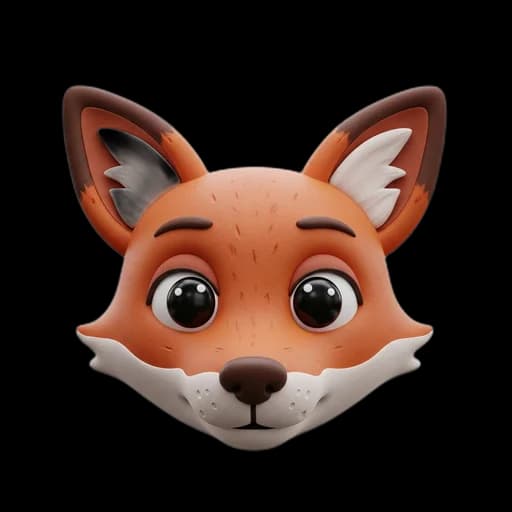
Tier 3
Fox
#Smart#Cunning#Charm
Fictional character concept
A fictional animal character built around the themes “Smart · Cunning · Charm”.
Names and keywords describe fictional animal characters. They do not reveal a person's personality, habits, health, destiny or career suitability from their face.
Key Traits
- Upward turned eyes
- Pointy chin
- Cool mouth shape
Production classifier criteria
These are normalized measurements used by WhatZoo algorithm 1.0. A profile must pass its gate before detail scores are compared.
Required candidate gate
chin ratio below 0.15 + eye slant above 1.8
Detail scoring rules
eye slant above 2 · chin ratio below 0.14 · mouth-width ratio above 0.38
Passing a gate does not guarantee the result. Up to three detail rules and the scores of other candidates are compared next.
How nearby face types differ
| Face type | Required gate |
|---|
| Fox | chin ratio below 0.15 + eye slant above 1.8 |
|---|
| Cat | eye slant above 2 + nose-width ratio below 0.15 |
|---|
| Wolf | eye slant above 1 + face aspect ratio above 1.35 |
|---|
Photo conditions that may change this match
A high or low camera changes the apparent chin ratio. Head tilt and expression change apparent eye slant. Retest with a neutral, front-facing photo.
These rules classify appearance for entertainment; they do not scientifically diagnose personality or ability.
See the full 478-landmark methodologyHow do similar animal types differ?
Cat and fox
Both use upward eye slant, but cat eligibility also uses nose width while fox eligibility uses chin length. A narrow nose and a short chin can qualify for both profiles.
These values are invented for explanation, not real people or experiment results. Only two profiles are compared; this does not predict the final match. The full classifier compares all animals, uses detail rules alone if no strict candidate qualifies, and randomly resolves top-score ties.
Passing the required conditions earns one point, plus the number of detail matches. Detail matches for an ineligible profile are shown for reference, not as a strict candidate score. Scores are not probabilities or accuracy rates.
Synthetic measurement example 1
Both profiles pass their required conditions and all three detail rules. They tie in this comparison; neither is a guaranteed final match.
- eye slant
- 2.2
- eye-distance ratio
- 0.4
- face aspect ratio
- 1.32
- nose-width ratio
- 0.12
- mouth-width ratio
- 0.4
- chin ratio
- 0.13
- smile flag
- No
Cat and fox — Synthetic measurement example 1| Animal type | Required conditions | Detail matches | Strict candidate score |
|---|
| Cat | Passed | 3 / 3 | 4 |
|---|
| Fox | Passed | 3 / 3 | 4 |
|---|
Synthetic measurement example 2
Only the nose-width ratio changes to 0.15. Cat requires a value strictly below 0.15, so the boundary value excludes it. Fox conditions are unchanged.
- eye slant
- 2.2
- eye-distance ratio
- 0.4
- face aspect ratio
- 1.32
- nose-width ratio
- 0.15
- mouth-width ratio
- 0.4
- chin ratio
- 0.13
- smile flag
- No
Cat and fox — Synthetic measurement example 2| Animal type | Required conditions | Detail matches | Strict candidate score |
|---|
| Cat | Not passed | 2 / 3 | Not eligible |
|---|
| Fox | Passed | 3 / 3 | 4 |
|---|
❓ Frequently Asked Questions
How is Fox classified?▼
The current WhatZoo candidate requirements are: chin ratio below 0.15 + eye slant above 1.8. Qualifying profiles are compared with other animals by counting matching detail rules. These conditions do not assess personality or ability.
Does Fox imply a personality or suitable career?▼
No. Character keywords are creative settings for fun. This classification cannot determine real personality, sleep habits, dating preferences, work performance or aptitude.
Can the same person get different results?▼
Yes. Pose, expression and lighting can affect measurements, and tied top candidates are resolved randomly. A changed result does not mean a change in personality or ability.